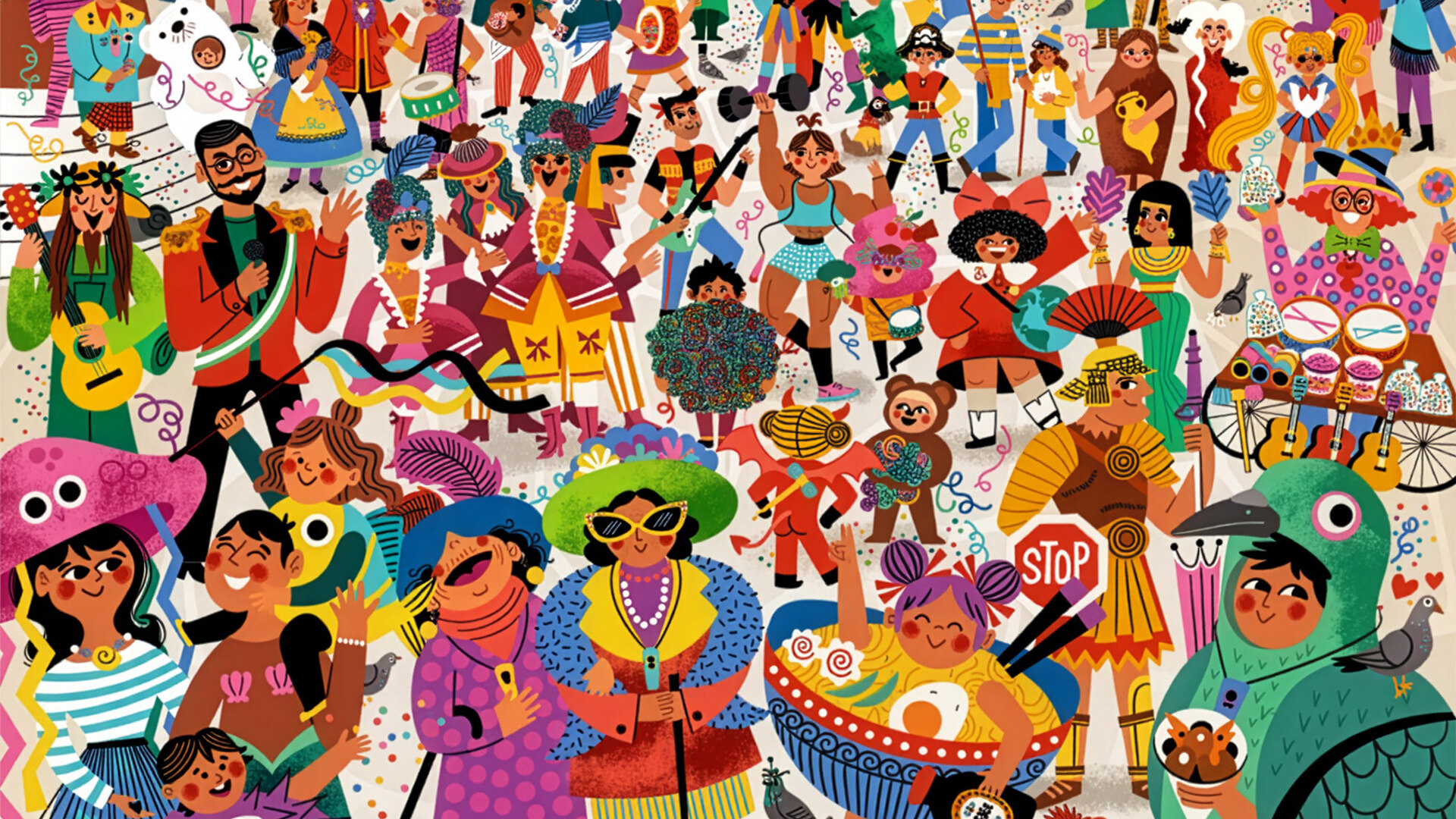
Carnival in Cádiz: Spain’s most famous carnival, 2 hrs from Marbella
Located on Spain’s Atlantic coast, just 2 hours west of Marbella, Cádiz throws one of Europe’s most singular and exuberant festivals, which also happens to be Spain’s largest mainland carnival. Carnaval de Cádiz is a cultural phenomenon and a true bucket-list event.
During Carnival week, street performances emerge spontaneously across the old town, while official competitions and the finals at the Gran Teatro Falla draw local and national attention. Parades, food-themed festivites and costumed processions weave through the streets, as day and night celebrations spill into plazas, bars and along the waterfront. The result is a city where organised events and improvised performances transform Cádiz into one continuous stage.

Carnival - a short history
Carnival in Spain is rooted in Christian tradition: historically it was a period of festivity before the austerity of Lent, allowing people to enjoy colour, music and feasting before the 40 days of reflection and restraint. Its origins incorporate older Mediterranean influences such as Roman Bacchanalia and Italian masked festivals, brought into Spanish ports through trade and cultural exchange.

The Carnival of Cádiz specifically traces back to at least the 16th century, when Genoese merchants helped bring the Italian carnival spirit to this busy Atlantic port. The people of Cádiz made it their own, injecting local humour, irreverence and satire into the songs and costumes that would become its hallmark.
Across centuries, the carnival has been temporarily curtailed, notably during the Spanish Civil War, but returned with strength and creativity, eventually being recognised as a Fiesta of International Tourist Interest in 1980.

Cádiz Carnival 2026
The official 2026 Cádiz Carnival runs from 12 to 22 February.
These dates surround Shrove Tuesday (17 February), the traditional peak of carnival season in the Spanish calendar before Lent begins.
In the weeks leading up to the official start, Cádiz already buzzes with rehearsals, performances and the COAC (Concurso Oficial de Agrupaciones Carnavalescas) — a major competition at the Gran Teatro Falla where chirigotas, comparsa, coros and cuartetos compete with new songs and sharp satire. Think of it as a culturally-rich variety show competition.

The performances explained
- Chirigotas are the most playful and comedic groups. Their songs are short, witty and deliberately provocative, poking fun at politics, celebrities and everyday life. Even without fluent Spanish, their exaggerated costumes, facial expressions and comic timing make them instantly engaging.
- Comparsas take a more serious, poetic approach. Their performances are musically rich and emotionally charged, often touching on social issues, identity and local pride. In Cádiz, comparsas are highly respected for both their vocal quality and lyrical depth.

- Cuartetos focus on theatrical comedy rather than music. With minimal instruments and a strong emphasis on dialogue, wordplay and improvisation, their performances feel closer to live street theatre, picture a Spanish-style SNL skit.
- Coros are larger groups, instantly recognisable for their elaborate costumes and their performances aboard decorated floats or moving platforms. Traditionally linked to Cádiz’s maritime culture, coros perform longer, narrative-style songs and are especially popular during daytime performances as they move through the city’s main squares.

Stay up to date on the 2026 Cádiz Carnival - Links of interest
Because Cádiz Carnival is partly official and partly organic, schedules can shift and new events pop up throughout the festival.
Local Cádiz city event listings
Check out the detailed list of street events, parades and community celebrations happening at Carnival this year → Ayuntamiento de Cádiz
Gran Teatro Falla
Dive deeper into the culture and head to the theatre → Programacion Gran Teatro
Follow updates on Instagram → @COAC.2026 on Instagram is an account that shares daily schedules and updates for performances.